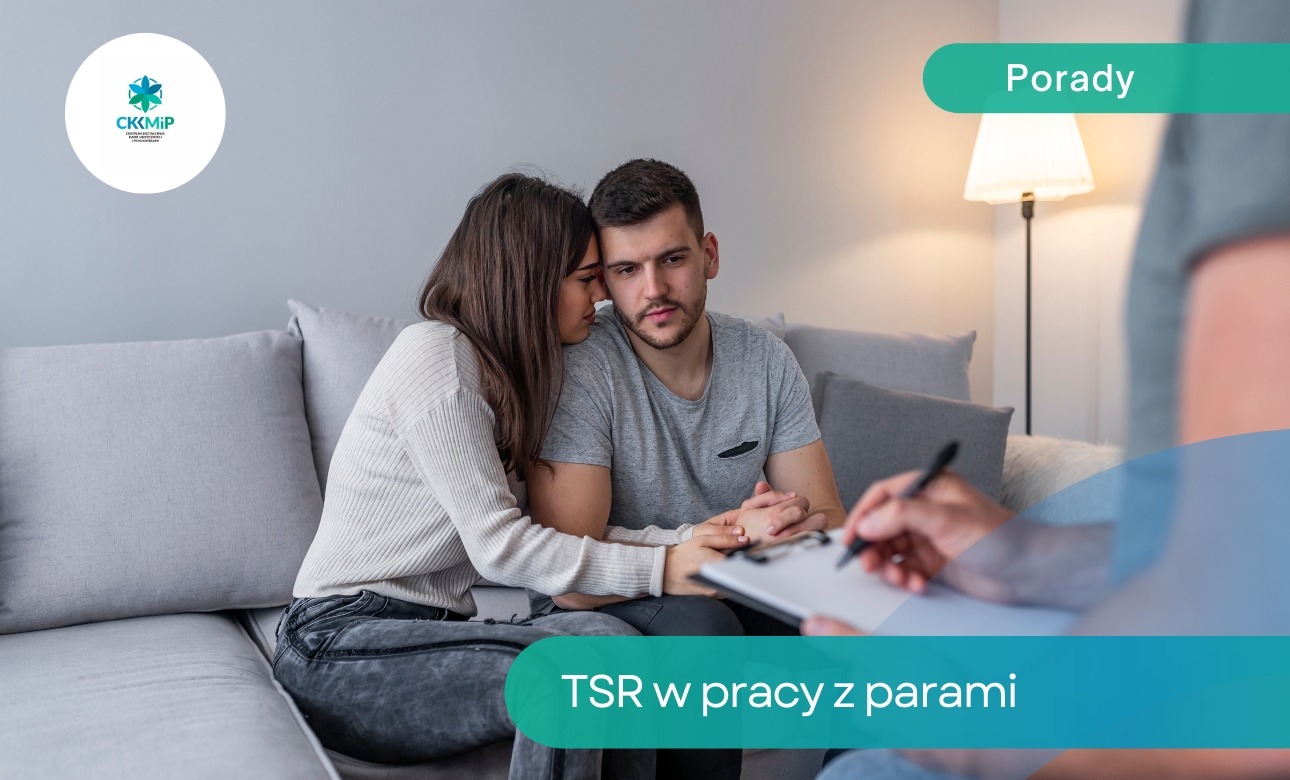
Solution Focused Therapy (TSR) is famous for the fact that it can take a client from "here is bad" to "here I see light" at the speed of an electric scooter. When working with couples, it works similarly - only instead of one scooter we have a tandem. The goal is not to dig up the entire history of the relationship, but to create a space in which partners will build a vision of the future together and take the first steps to get closer to it.
Dlaczego TSR dla dwojga?
- Fokus na przysPLNość, nie na winę.Instead of judging who was at fault in the latest argument over the Netflix remote, we explore how the couple wants to function in version 2.0.
- Short form, specific effects.On average, 3‑6 meetings allow you to launch new behaviors and the language of appreciation before everyday life becomes a spoiler.
- Cultural flexibility.The model is well placed in the Polish reality - it respects privacy, does not force "therapeutic tears", and yet goes deeper than the quick advice of an aunt from Facebook.
Kluczowe pytania w konfiguracji dla pary
1. Pytanie o najlepsze nadzieje (Best Hopes)
“If our meetings were helpful, what would you both notice about your relationship in three months?”
It allows you to find a common denominator - even if everyone formulates it slightly differently. In Anna and Bartek's case it sounded like this:
Anna: “We will be able to talk again without scrolling through the list of allegations.”
Bartek: "I'll feel like I can be myself and not get a yellow card straight away."
2. Pytanie cud (Miracle Question) z perspektywy my
Scenariusz wyobrażeniowy przenosi parę w przysPLNość, gdzie cudownie rozwiązały się wszystkie kwestie. W wersji dla dwojga terapeuta pilnuje, by każdy opisał zachowania zauważalne dla partnera (a nie: „ja się tak czuję”).
3. Skala 0‑10 w trybie lustrzanym
Partners place themselves and the relationship on two separate axes: „Jak blisko jestem swojej najlepszej wizji?” oraz “How close do I think my partner is?”. The confrontation of numbers triggers a conversation about small gestures ("a raise from 4 to 5 can simply be an SMS: Thanks for the coffee”).
4. Finding exceptions in a common narrative
The therapist tracks down moments when the couple acted as a well-coordinated duo - even if it was just planning a vacation five years ago. The secret is in the step-by-step reconstruction: what exactly did you do differently and who initiated it?
The course of the process – a three-meeting prototype
Session 1: Alliance and the dream map
- Contract for a common goal + definition of "good effect".
- Wersja mini „Miracle Question”.
- Zadanie domowe: obserwować i notować pojedyncze momenty, które posPLNy lepiej niż zwykle.
Session 2: Exploring exceptions and building resources
- Analysis of collected examples; the therapist examines micro-behaviors.
- Partner compliments: each person hears feedback that is difficult to accept when sober.
- Scale 0-10 + implementation of small steps (“what will increase by 0.5?”).
Session 3: Consolidation and plans for independence
- Assessment of progress; visualization of the day when therapy becomes unnecessary.
- Relational maintenance plan: appreciation rituals, check-in workshop once a week.
- Ustalenie booster session in three months as an option, not a coercion.
Example: Marta and Krzysztof complained that "everything was going out". After the second session, they introduced a 10-minute morning check-in: each person says what they need to do today and how their partner can help. The satisfaction scale jumped from 3→6.
What if partners' goals diverge?
- Divergent visions:The therapist conducts parallel dialogues until he finds the lowest common denominator (sometimes it's "we want more peace at home" - and he starts from there).
- Commitment asymmetry:We focus on the micro-gestures of the more motivated partner, but we emphasize that each step is a test for both of them.
- Wysoki konflikt:We enable safety rules, sometimes individual work + freeze on sensitive topics until at least one exception occurs.
- Red flags (violence, addictions):Here, TSR is sometimes too light – crisis interventions must be included or sent to a specialist.
Integration with other approaches – when EFT or Gottman come behind the scenes
TSR is eclectic in nature. Adding elements of Emotion-Focused Therapy (naming feelings) or Gottman's techniques (e.g. „breadcrumbing of kindness”) can be helpful if a couple needs a specific tool to regulate emotions. The key: we do not mix everything at once, but consciously "taste" the process.
Scientific evidence – a quick overview
- Kim i in. 2021: meta‑analysis of 43 TSR studies in par therapy – medium effect d= 0.53 (relational satisfaction).
- Lee 2023: randomized study on 60 couples; after 5 TSR sessions, maintaining the effect after 6 months (Dyadic Adjustment scale) - 68% of couples >1 SD above the baseline.
- Polskie realia:SWPS University project (2024) with the participation of 24 couples - communication improved by 30% according to the author's dialogue quality scale.
Exercises between sessions – self-service, but qualitative
- Small exception log:Each one writes down one little thing that "made a difference" and shares it at the end of the day.
- Capsule of words of appreciation:Declaration 5 praises in 5 days. The same quality must not be repeated.
- Future Walk:Once a week, the couple goes for a 20-minute walk and only talks about what works.
TSR in working with couples is a method that takes what they already have - even if hidden under a layer of old regrets - and turns it into fuel for relational change. By asking about best hopes, scaling progress, and tracking down exceptions, partners learn to view the relationship as a collaborative R&D project rather than a battlefield to be right. If you prefer specifics to psycho-digging, TSR sets a clear goal: take at least one step closer to a vision you both agree is worth the effort.
Do you want to work with couples using the TSR method? Start with training: